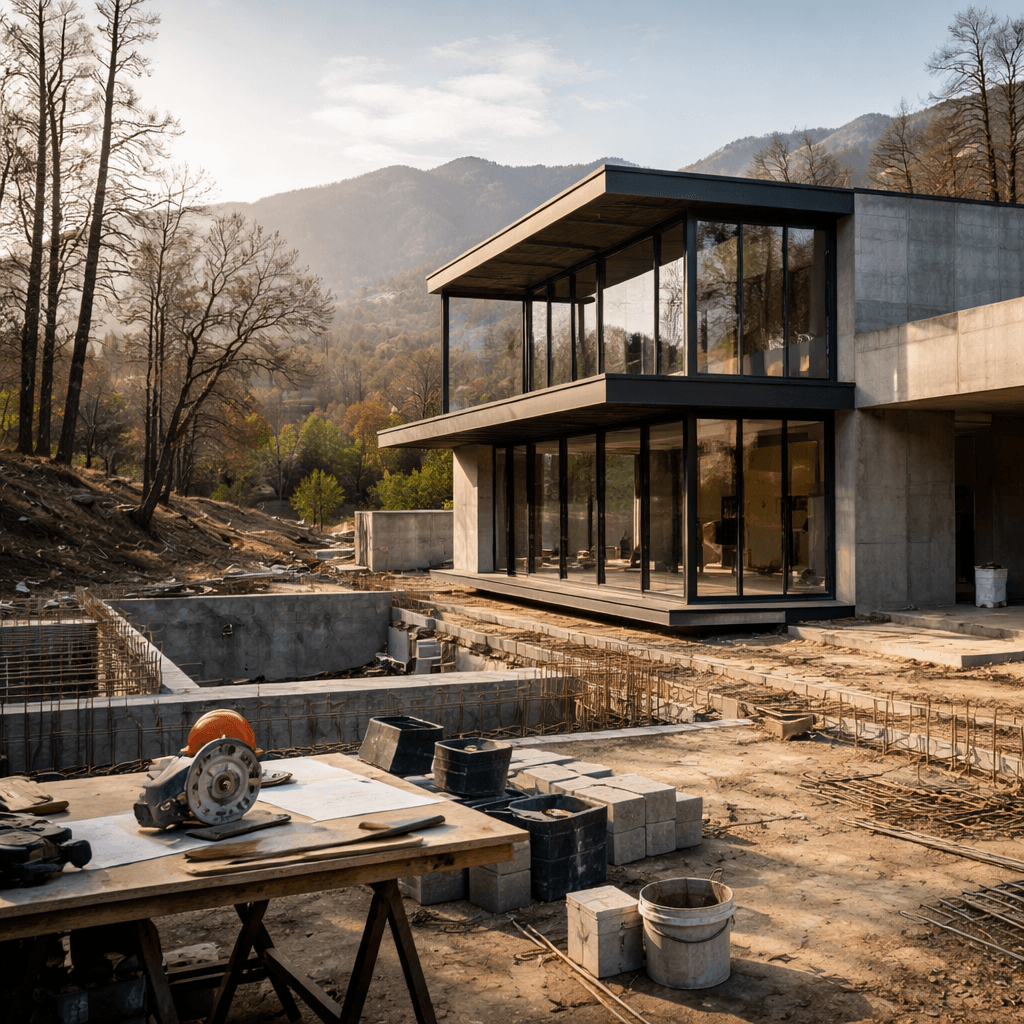
When the Eaton Fire destroyed 9,418 structures in Altadena, California in January 2025, Colleen and Jason Warnesky watched their 1,400-square-foot home burn. They'd survived close calls with the Station Fire in 2009 and the Bobcat Fire in 2020. This time, they weren't so lucky. But instead of rebuilding the same way, they're part of a wave of disaster survivors across the country who are ditching traditional wood-frame construction for something different: prefabricated homes made with fire-resistant materials like steel, concrete, and composite panels. Dozens of families in their Altadena neighborhood chose manufactured homes after UCLA's city-LAB program showcased six prefab housing options and a guide to navigate financing. The Warneskys went with Honomobo, a Canadian modular company building them a house of glass, steel, and concrete—no more wooden decks that'll go up like kindling.
This shift reflects a bigger change in how Americans think about housing in disaster-prone areas. Nearly 21 million people in the U.S. now live in manufactured or mobile homes, making up more than 9% of new home starts in 2024, with prices largely unchanged over three years. Most sales happen in Texas, Florida, and California—states facing nearly annual flooding, hurricanes, or wildfire disasters. The appeal isn't just cost. It's peace of mind. After experiencing decision fatigue from insurance paperwork and losing everything, the Warneskys said picking something from a catalog that arrives fully built felt like a lifesaver. But Colleen Warnesky was clear about their main motivation: "If there was a way to make it so that we had less to worry about if another fire happened in the future, we'd go with that."
Here's what makes these homes different. Many prefab companies now design houses that can withstand category 5 hurricane winds up to 250 mph, earthquakes, hail storms, massive snowfall, and fire. Prices range from below $100 to over $500 per square foot (excluding land), often falling under traditional on-site building costs. Harrison Langley, CEO of MDLR Brands, builds with composite structural insulated panels that have a 30-minute fire rating—meaning "you could hide behind this wall without the heat coming through for 30 minutes," and adding cement board on top could give you "about an hour to get out of a building". The panels also flex better than wooden frames during earthquakes, and their fiberglass exteriors can handle hurricane-force winds. Think of it this way: traditional two-by-fours have actually gotten smaller and weaker over the years, while these new materials are engineered to survive the worst nature can throw at them.
The market's responding to reality. Climate change isn't making wildfires, hurricanes, and floods less frequent—it's making them worse and more common. For neighbors like Linda and Liam Mennis across the street from the Warneskys, going prefab didn't mean sacrificing style. They're working with Bevy House, a California company that takes custom architectural plans and figures out how to make them modular. Even the iconic design firm Eames Office is getting into the game, launching a modular system in Milan last week that'll expand to full homes by 2027. The rebuild in Altadena is still slow—only 23 residential properties of nearly 6,000 significantly damaged had completed rebuilding as of December 2025. But the families choosing prefab aren't just rebuilding houses. They're building for the next fire, the next storm, the next disaster they hope never comes but now know they can't assume won't.