The Los Angeles housing market is sending a clear signal to anyone paying attention: the seller's advantage has evaporated. Among 79 homes sold in Los Angeles City on May 5, 2026, nearly 60% sold below their asking price, with 30 homes settling at 1-5% under list and another 17 dropping 6% or more. This isn't a market crash—it's a negotiation, and buyers now hold the leverage. The days when sellers could name their price and watch bidders compete are over. What we're seeing instead is a market where pricing correctly from day one determines whether a home sells in weeks or languishes for months.
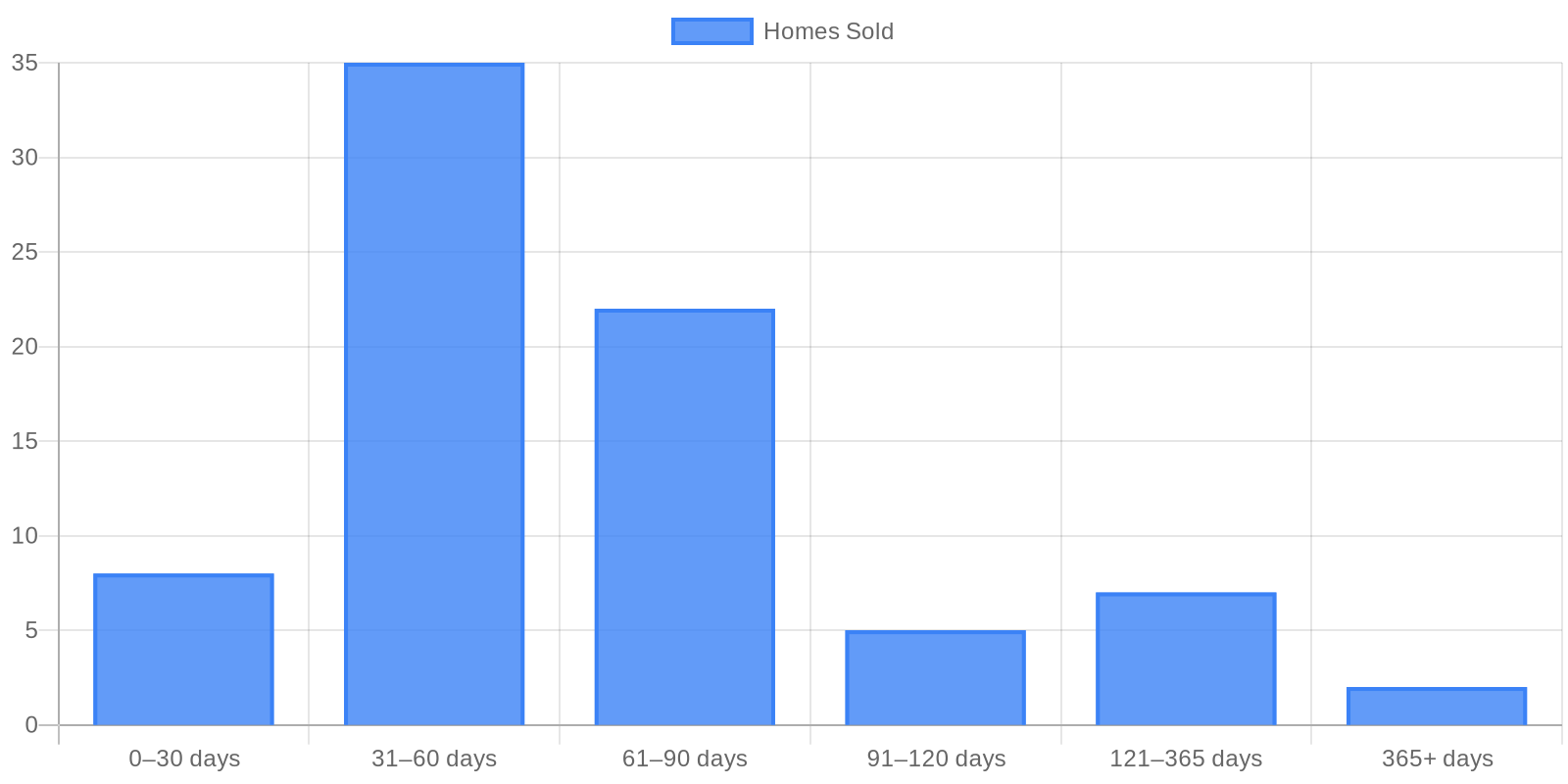
Distribution of days on market for 79 homes sold in Los Angeles City on May 5, 2026, showing the majority took 31-90 days to close.
The timeline data tells the real story of how long sellers are waiting. Out of 79 closed sales, 35 homes took between 31 and 60 days to sell—the largest single group. Another 22 homes needed 61 to 90 days. Only 8 homes sold within the first month, suggesting that quick sales are now the exception rather than the rule. At the other end, 5 homes took 91 to 120 days, 7 sat for four months to a year, and 2 properties lingered over a year before finding buyers. The numbers sketch a market where patience—or price reductions—have become essential selling tools.
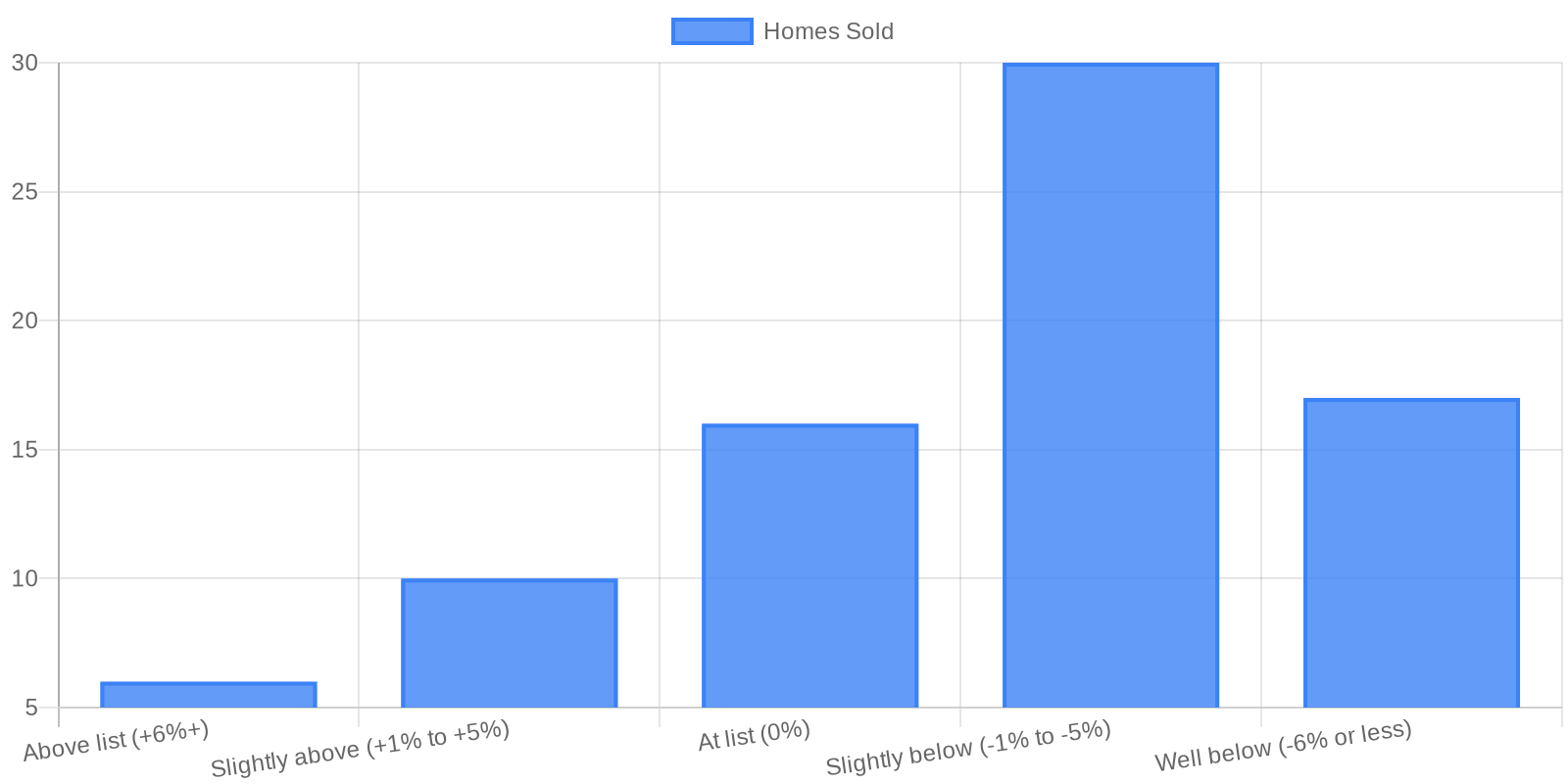
Sale price relative to list price for 79 Los Angeles homes, with 59% selling below asking and only 20% exceeding their list price.
The pricing picture reinforces the shift in power. Just 16 of the 79 homes sold at exactly their listing price, while only 6 commanded premiums of 6% or more above asking. Another 10 eked out modest gains of 1-5% over list. But the bulk of transactions—47 homes, or 59%—closed below what sellers originally wanted. Thirty settled 1-5% under asking, and 17 dropped 6% or more. This distribution mirrors the broader Los Angeles trend: homes are sitting longer because sellers are testing the market with aspirational prices, then adjusting downward when buyers don't bite. The two datasets connect directly—homes that take longer to sell are the ones forced to cut their ask.
The control article data explains why this is happening now. According to Realtor.com, the citywide median days on market hit 47 days as of April 2026, up 9.3% year-over-year, while the sale-to-list ratio sits at 99%—meaning homes are selling just under asking on average. Active listings jumped 4.28% year-over-year, giving buyers more choices. As one Los Angeles real estate specialist notes, "pricing is no longer aspirational"—buyers treat the list price as a credibility signal, and when it's inflated, they simply move on. The median listing price of $1.15 million is down 7.85% from a year ago, yet sellers who overprice still watch their properties sit. Multiple sources confirm the pattern: homes priced to market data attract serious offers within two weeks, while overpriced listings often take 90 days or longer before sellers capitulate.
This shift reflects a fundamental rebalancing after years of pandemic-era distortion. The Los Angeles market is "less volatile, more deliberate, and driven by fundamentals rather than extremes" as it normalizes following the rate shocks of 2022-2023. Buyers now treat pricing as a credibility signal—when it aligns with market reality, they engage; when it doesn't, they move on. The 31-60 day selling window that captured the most homes in our dataset aligns with industry benchmarks: under 45 days signals a seller's market, 45-70 days indicates balance, and over 70 days favors buyers. Los Angeles sits squarely in that balanced zone, where neither side dominates but sellers must work harder. Sellers are accepting offers below asking, creating a meaningful gap between pricing intent and market reality—this is not a collapsing market, it is a market negotiating. The broader national context supports this: about 18% of homes sold above list price in March 2026, well below the frenzied competition of 2021. What makes Los Angeles particularly instructive is how cleanly the data separates winners from losers. The 16 homes that sold at asking and the 16 that exceeded it likely hit the market priced correctly and in good condition. The 47 that sold below asking probably started too high, sat too long, or needed work buyers wouldn't overlook.
The takeaway is simple but crucial: this market rewards preparation and punishes wishful thinking. Sellers who launch with data-driven pricing and professional presentation are still closing deals in reasonable timeframes. Those who test the market with inflated asks are discovering that today's buyers—armed with the same comparable sales data agents use—won't chase overpriced listings. For buyers, the opportunity is real but requires patience. Nearly three-quarters of sales took more than a month, and the majority closed below asking, which means negotiating room exists if you're willing to wait out sellers who started too optimistic. The Los Angeles market isn't broken—it's just fair again.