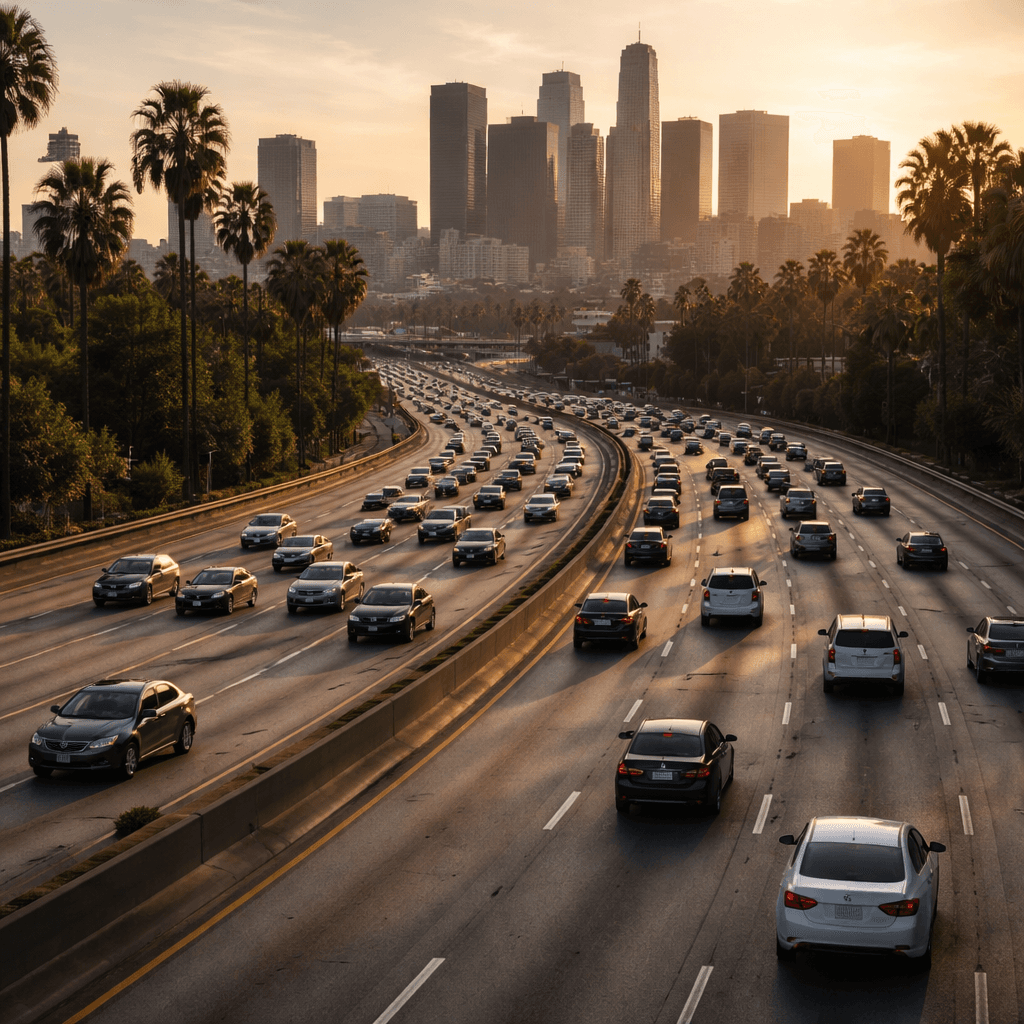
Workers in Los Angeles County spent an average of 30.43 minutes commuting in 2024, the shortest travel time in five years, according to data published by the U.S. Census Bureau and released through the Federal Reserve Economic Data (FRED) system on January 29, 2026. The figure marks a steady decline from the 2020 peak of 31.75 minutes, suggesting a shift in commuting patterns across America's second-largest county.
The five-year trend shows consistent year-over-year decreases: commute times fell from 31.75 minutes in 2020 to 31.37 minutes in 2021, then to 31.00 minutes in 2022, 30.79 minutes in 2023, and finally 30.43 minutes in 2024. That's a total drop of roughly 1.3 minutes, or about four percent, over the period. The data comes from the American Community Survey's 5-year estimates, which the Census Bureau compiles by dividing the total aggregate travel time for all workers by the number of commuters aged 16 and older.
The report notes that these figures are "period" estimates derived from data collected over a 60-month period, not snapshots from a single point in time. The Census Bureau cautions that users should "use extreme caution in making comparisons with consecutive years" because multiyear estimates released in back-to-back years contain mostly overlapping data. For example, the 2010-2014 and 2011-2015 estimates share sample data from four of the five years.
The methodology means the 2024 figure of 30.43 minutes actually represents data collected from 2020 through 2024, capturing a period that includes pandemic-era changes to work patterns, the rise of remote work options, and shifts in traffic patterns. The calculation uses two specific ACS variables: aggregate travel time from table B08013 and the total number of commuters from table B08012. Because these are rolling averages rather than annual snapshots, the data smooths out short-term fluctuations but may lag behind sudden changes in commuting behavior.
The Census Bureau has not announced a next release date for updated figures, leaving uncertainty about when fresher estimates will become available. For now, the 2024 data offers the most current official picture of commuting patterns in a county where millions of workers navigate some of the nation's most congested roadways—and where the average commuter is now getting home just a bit faster than they did five years ago.