Most Los Angeles single-family homes sold in May 2026 closed within 5% of their list price—401 below asking and 366 at or slightly above. That narrow band around list price, accounting for 70% of all sales, suggests sellers have largely abandoned the aspirational pricing that defined earlier years. The data shows a market where both sides have learned to read the room: sellers price to move, and buyers respond when the numbers make sense. What stands out isn't the existence of discounts, but how tightly clustered transactions have become around asking price, a sign that pricing discipline has replaced the guessing games of previous cycles.
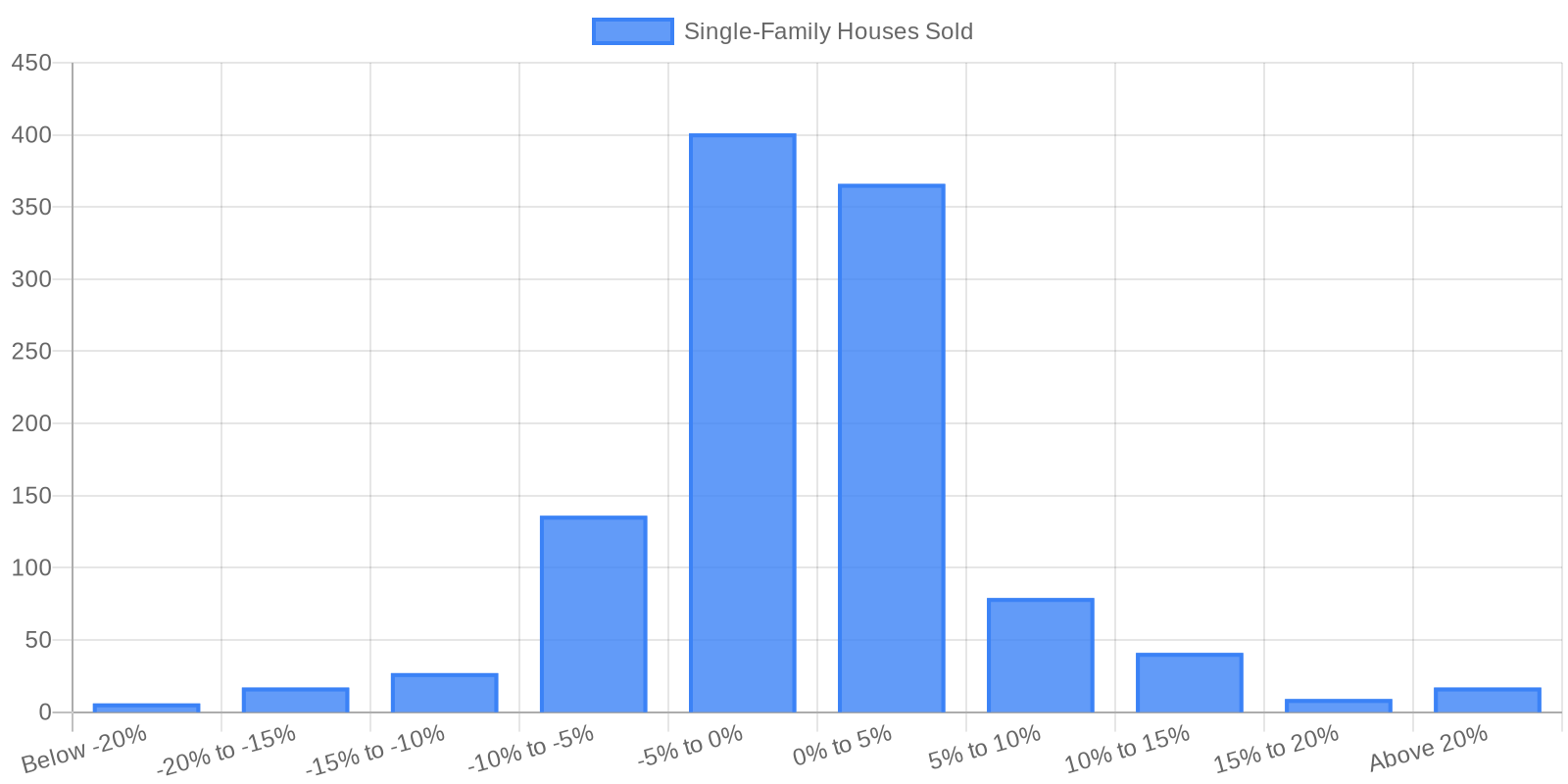
Distribution of 1,099 single-family home sales in Los Angeles by sale-to-list price difference, May 2026. The majority of transactions (767 homes) settled within 5% of asking price, indicating a market where accurate pricing drives outcomes.
The single-family distribution reveals something else worth noting: dramatic discounts and bidding wars have both retreated to the margins. Only 186 homes sold at discounts exceeding 10%, while just 67 commanded premiums over 10%. The bulk of the market—903 of 1,099 transactions—settled in the -10% to +10% range. This compressed pricing band indicates buyers aren't desperate enough to overbid wildly, but they're also not finding enough leverage to demand steep concessions. The 366 homes that sold above list price prove there's still competition for well-priced inventory, but it's selective rather than frenzied.
The condo market tells a notably different story, one that tilts more decisively in buyers' favor. Of 283 condos sold in May, 116 went above asking while just 142 sold below. That's a 55% premium-to-discount ratio compared to 48% for single-family homes. But the real divergence shows up in the extremes: only 14 condos sold at premiums over 10%, versus 146 that sold below asking by 5% or more. The data suggests condo sellers face stiffer resistance—buyers have more alternatives, negotiate harder, or both. Single-family inventory remains structurally tight, but condos appear to have crossed into genuine buyer leverage territory.
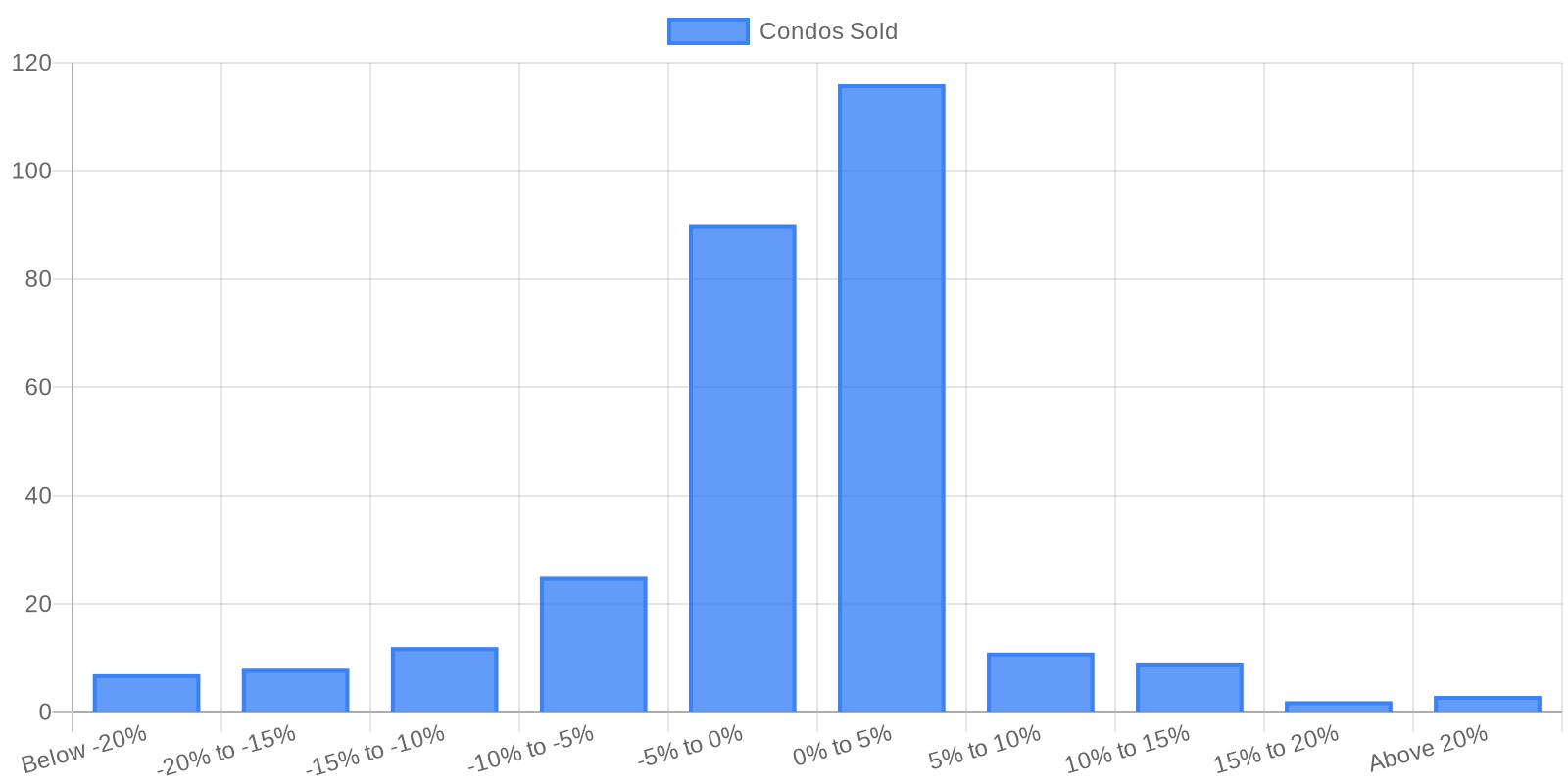
Distribution of 283 condo sales in Los Angeles by sale-to-list price difference, May 2026. Condos showed greater buyer leverage, with 142 selling below asking compared to 116 above, and fewer premium sales over 10% than single-family homes.
The Los Angeles housing market in 2026 reflects what industry observers describe as "stability, selectivity, and strategy," with homes priced correctly still attracting multiple offers. According to recent market analysis, "Overpriced listings sit longer and adjust downward," a pattern the May data confirms. Realtor.com reports homes sold for approximately 100% of asking price on average in May, characterizing the market as balanced. The condo-versus-single-family split likely reflects broader structural forces: chronic underbuilding of detached homes continues to support pricing power, while condo supply—particularly in areas affected by remote work patterns—has loosened enough to shift negotiating leverage back to buyers.
The May sale-to-list data captures a market in transition, one where pricing accuracy determines outcomes more than property type alone. Sellers who test the market with inflated asks now face extended days on market and eventual reductions, while those who price to recent comps move inventory efficiently. Buyers, meanwhile, have learned to distinguish between homes priced to sell and those priced to negotiate. The 70% of single-family sales clustering within 5% of list price suggests both sides have adapted to the new reality: this isn't a seller's market anymore, but it hasn't tipped into distress either. It's a market that rewards preparation over optimism—and punishes anyone still playing by 2021 rules.