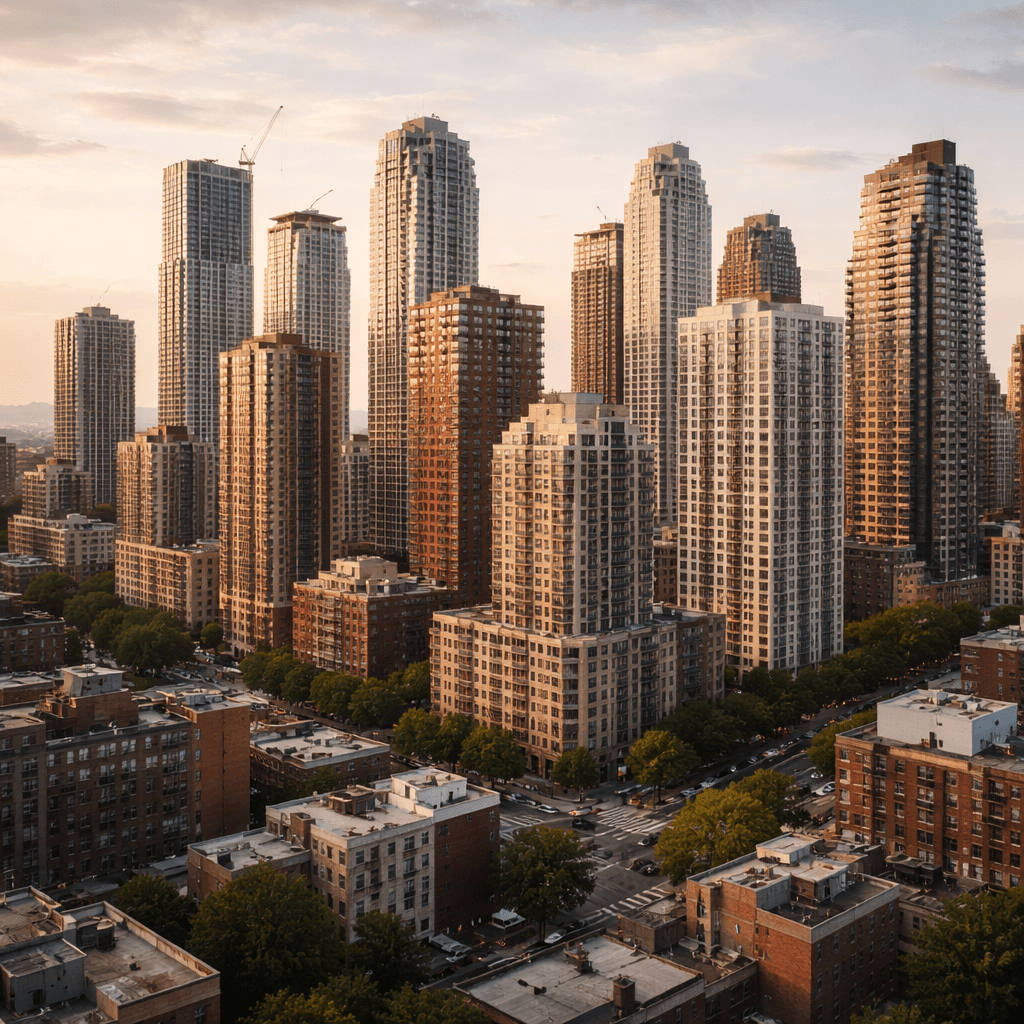
Downtown Brooklyn, New York City, has added more concentrated housing than any neighborhood in the United States, with more than 8,800 units built within a half-mile radius of a single block between 2020 and 2025, according to a report published June 18, 2026, by the Urban Institute. The analysis reveals that while the nation added more multifamily housing between 2021 and 2025 than any other time in the past 37 years, growth has been heavily concentrated in downtown areas and transit-accessible neighborhoods rather than suburban sprawl.
Three other neighborhoods added more than 8,000 housing units in a half-mile radius: Washington, DC's NoMa district, downtown Nashville, Tennessee, and downtown Miami, Florida. When measuring growth clusters—groups of adjacent census tracts that added at least 2,000 units per square mile—downtown Nashville leads the nation with almost 25,000 housing units added between 2020 and 2025. Central Philadelphia, downtown Brooklyn, downtown Seattle, downtown Salt Lake City, and central Miami each added at least 17,000 units. The Greenpoint and Hunters Point waterfront neighborhoods in Brooklyn and Queens added housing at a remarkable density of more than 16,000 units per square mile, with Jersey City's Journal Square and Seattle's U District also showing particularly high growth densities. Of the 70 largest growth clusters identified, about half are in traditional downtown neighborhoods that were previously occupied by office uses.
Transit access plays a critical role in concentrated housing growth. Of the top 20 blocks by housing supply growth, 13 are located within two blocks of a metro or light rail transit station, and another two are within two blocks of a commuter rail station. The New York City region has been especially effective at generating concentrated development, with 19 of the 70 largest growth clusters in New York City itself and another four in the surrounding region. The report finds that these communities have attracted a steady supply of new apartment units because they can provide residents with walkable, mixed-use neighborhoods near jobs where they don't have to rely on a car.
The postpandemic weak office market has reinforced the downtown residential growth trend that was already at play in the 2010s, with less competition from office uses making residential development more feasible. Public-sector initiatives to reconstruct underdeveloped neighborhoods have also spurred concentrated construction zones—Washington, DC's Navy Yard district and Portland's Pearl District, each of which accommodated thousands of new homes over the past five years, were previously occupied by light industrial uses. In Chicago, the expansion of the downtown zoning area in 2016 has been associated with the creation of about 9,000 new housing units between 2020 and 2025. By adding housing in transit-accessible neighborhoods, cities enable residents to travel without a car, saving them money and reducing negative environmental effects.
To further encourage concentrated housing growth, the report recommends cities rezone large downtown or downtown-adjacent neighborhoods to convert underused or monofunctional areas into dense residential communities, emphasize public investments like affordable housing and parks in neighborhoods near transit, and improve quality of life by ensuring concentrated growth neighborhoods are well landscaped with plentiful tree canopy coverage and comfortable places to walk and bike. While national trends show continued disproportionate housing development on greenfields far from existing neighborhoods, the success of downtown areas in attracting thousands of new units shows there's strong demand for walkable, transit-connected living.