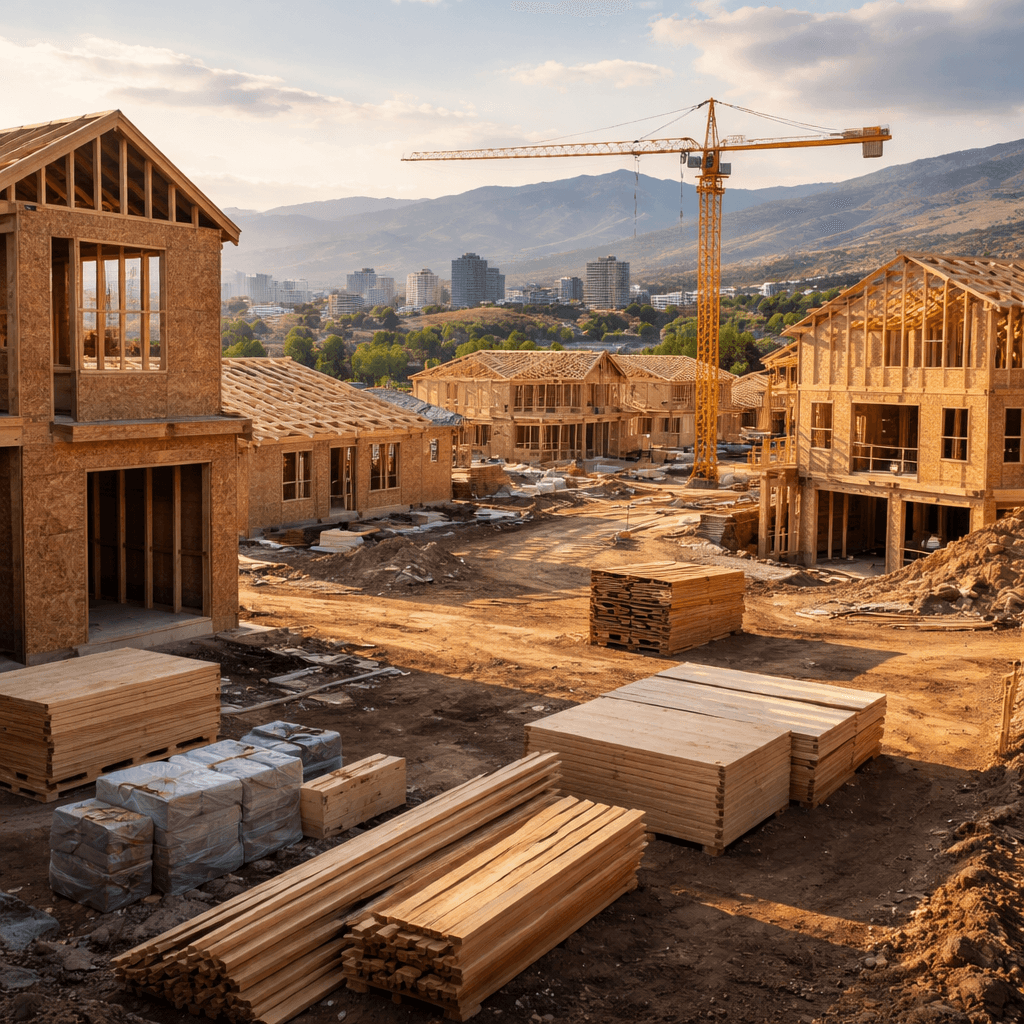
Boise, Idaho, issued nearly as many housing permits as Los Angeles over a recent 13-month period — despite having just 238,000 residents compared to LA's 3.9 million — according to a June 12, 2026 analysis by the Pacific Research Institute. The report highlights how Boise's incentive-focused strategy is producing more housing development than much larger cities using regulation-heavy approaches. The city is tackling what was once ranked the nation's worst affordability crisis by encouraging market-rate construction rather than mandating affordable units.
The numbers paint a stark contrast. Boise approved 9,846 housing permits over 13 recent months — 8% more than Portland's 9,102 permits, even though Portland has nearly three times Boise's population at 636,000 residents. San Jose, with nearly 1 million people, issued just 6,700 permits, 33% fewer than Boise. Seattle saw new housing permits drop 63% since December 2025 after its Democratic Socialist mayor took office in January, despite having 800,000 residents. Los Angeles, with 16 times more people than Boise, approved only 24,000 permits according to Redfin data, though other sources put the figure closer to 10,000. Meanwhile, Idaho now leads the nation in permitting new housing at double the national average, according to recent U.S. Census figures.
The report attributes Boise's success to what Professor Vanessa Fry, director of the Idaho Policy Institute at Boise State University, calls a "carrot state" philosophy. "Idaho is a carrot state — and not a stick state," Fry told the report's author. "We like to see less government, not overburden people." The city passed a new zoning code in 2023 and added incentives for affordable and sustainable development in April 2026, while offering free accessory dwelling unit plans on its website. The state also passed housing bills creating a "shot clock" for faster permitting times. Fry noted that over the last decade there's been "a real effort to find developers who are building market-rate housing and are also interested in affordable options, but they don't mandate it."
The report argues that mandating affordable housing can backfire by increasing costs and delaying construction. In Los Angeles, subsidized properties can cost $700,000 per unit, and developers spend years sorting through red tape, meaning fewer houses get built. California has 40,000 affordable units stuck in the pipeline and is now asking voters for another $10 billion in funding, despite approving $6 billion in bonds for affordable housing in 2018. Boise's Denton Apartments — the city's largest affordable-housing development — took about three years from permit to move-in, while California's backlog continues growing. The Los Angeles Times headlined a story in October 2025: "Almost no one is building new apartments in Los Angeles," partly due to the city's "mansion tax" that also applies to apartment construction. The report notes that LA has become a risky investment for developers.
The analysis concludes that Boise's market-based approach offers a model other cities should follow, despite some contradictions. The city banned additional foothills development in January and has protected over 10,000 acres from future development through a $10 million open-space levy passed in 2001. The report acknowledges this could work against Boise's market-based goals, since restrictions on outward growth can drive up costs everywhere. Still, the overall philosophy is working: Boise's population has grown about 12% in the last decade, and the city is managing that growth by encouraging housing "for all income levels, within the existing city limits" rather than through urban-growth boundaries. The bottom line: encouraging the market to provide needed development produces more housing than regulation-heavy strategies that sound good on paper but fail in practice.