Los Angeles single-family homes are moving off the market at a pace that defies the national trend. In May 2026, nearly 40% of single-family home sales closed within 31 to 60 days—444 homes out of 1,099 total transactions, according to recent market data. That's double the number that sold in under a month and nearly twice the amount that lingered for three months or more. This concentration in the "sweet spot" window tells us something important: LA isn't operating like the sluggish national market where homes sat for 66 days as of February 2026 amid what some call a "record-strong buyer's market." Instead, homes here are priced to move and they're actually moving—just not at the breakneck speed of pandemic-era bidding wars.
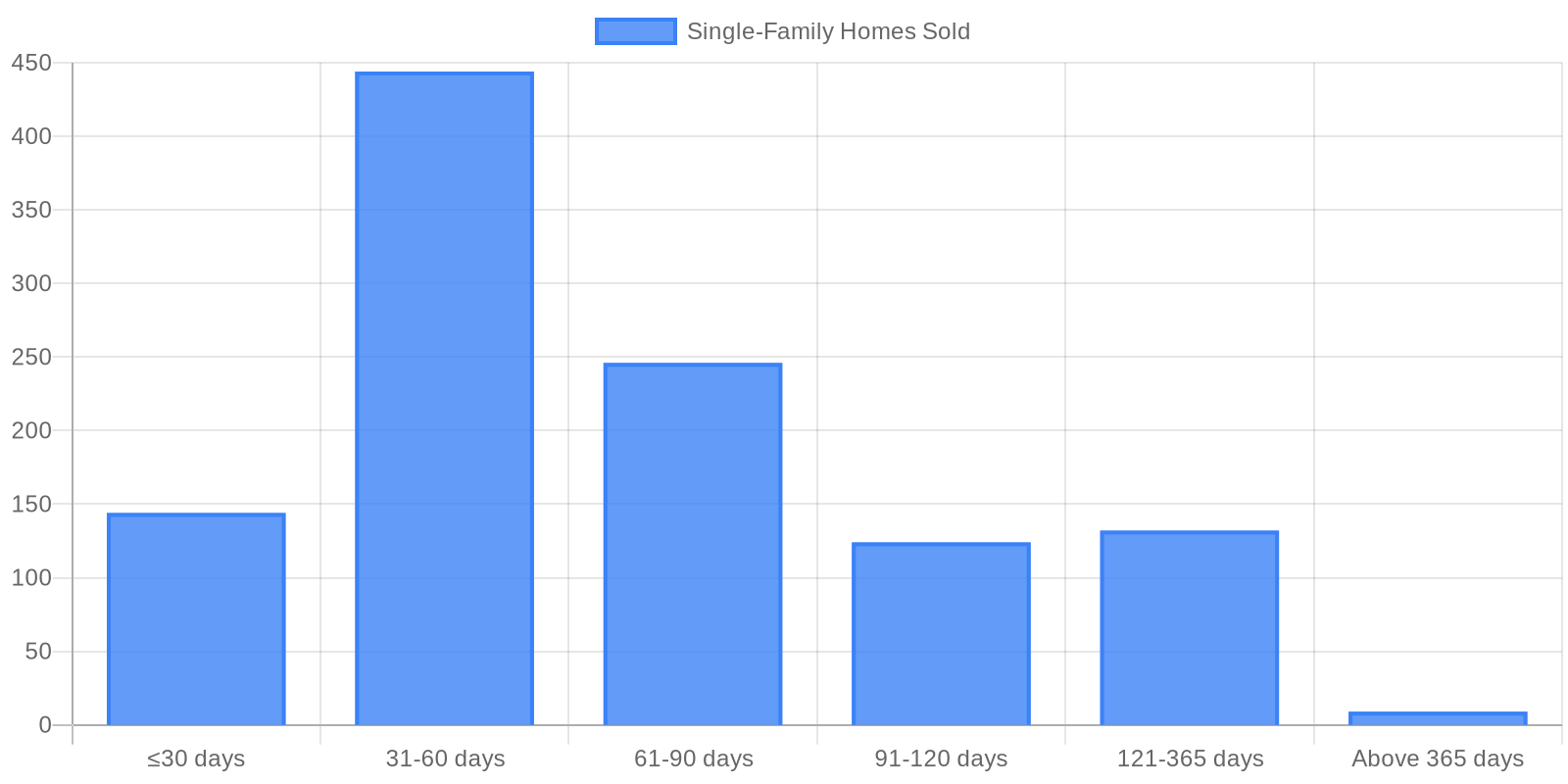
Distribution of 1,099 single-family home sales in Los Angeles County by days on market in May 2026, showing concentration in the 31-60 day range. Data from Realtor.com via FRED.
The distribution reveals a market that's found its rhythm after years of chaos. Single-family homes selling in 31 to 60 days dominated with 444 transactions, while the under-30-day category captured 144 sales—13% of the total. Another 246 homes took 61 to 90 days, and 124 required 91 to 120 days. The longer tail shows resilience too: 132 homes sold after spending 121 to 365 days on market, and just 9 took more than a year. What stands out isn't just the 31-60 day peak—it's how few homes are getting truly stuck. Only 141 total sales took longer than four months, suggesting that homes priced correctly and marketed strategically are still selling in a city where inventory constraints remain real.
Condos tell a parallel story with a slower pulse. Out of 283 condo sales in May 2026, just 34 closed within 30 days compared to 144 single-family homes in that same window. The condo market's peak also landed in the 31-60 day range with 99 sales, followed by 65 in the 61-90 day bracket and 35 in the 91-120 day stretch. Another 46 condos took four months to a year, and 4 exceeded a year on market. The pattern mirrors single-family trends but at a compressed scale—condos are taking proportionally longer to sell and attracting fewer quick transactions. This gap reinforces what the single-family data already suggested: detached homes in Los Angeles are holding their appeal in ways that attached housing isn't quite matching, likely reflecting pandemic-era shifts toward suburban homes with more space that haven't fully reversed.
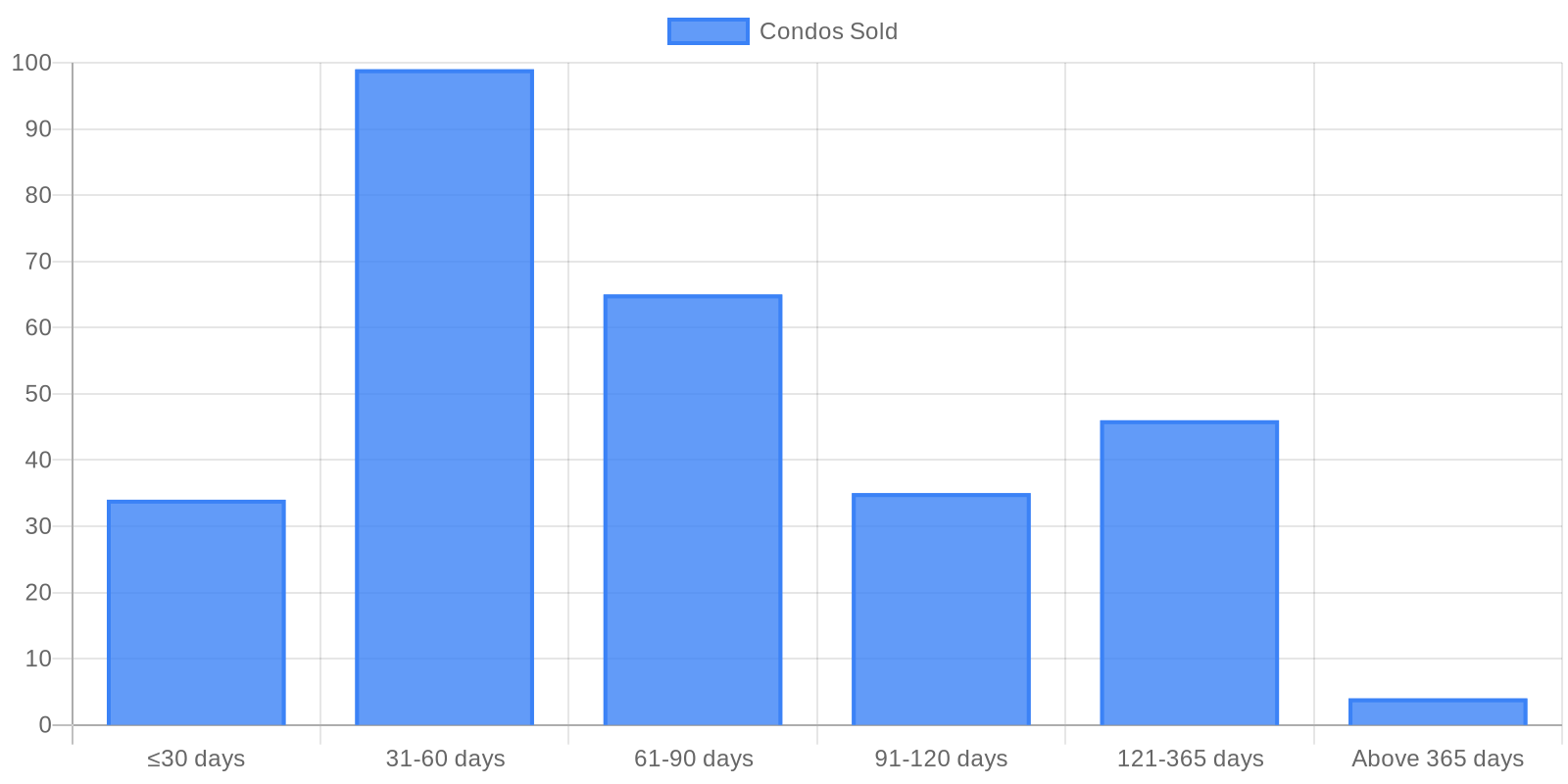
Distribution of 283 condo sales in Los Angeles County by days on market in May 2026, revealing slower transaction speeds compared to single-family homes. Data from Realtor.com via FRED.
The Federal Reserve's tracking data adds crucial context to these timelines. Los Angeles County's median days on market hit 48 days in May 2026, amid predictions of very small housing inventory that drives prices higher through simple supply and demand. That 48-day median sits well below the national median of 66 days in January 2026, which rose seven days from a year earlier as gaps grew between seller expectations and what buyers could afford with mortgage rates hovering above 6%. The data explains why LA's 31-60 day cluster is so pronounced—it's not just coincidence. According to real estate market research, when homes go under contract in just a few days it suggests high demand and limited supply in classic seller's market behavior, while rising days on market typically gives buyers more time and negotiation leverage. Los Angeles is threading the needle between these extremes.
The Los Angeles market in 2026 is defined by stability, selectivity, and strategy, with ongoing shortage of new construction continuing to fuel buyer demand and drive price appreciation through lower borrowing costs and limited supply. This explains why homes aren't languishing: there simply aren't enough of them. At the same time, homes that don't go under contract within about two weeks begin accumulating stigma in buyer perception because days on market is visible to everyone, making pricing correctly from day one more important than it has been in years. The result is a market where sellers have learned to price aggressively but realistically from listing day one, buyers move with purpose but not panic, and transactions cluster in that 30-60 day window where both sides find terms they can live with. The national slowdown hasn't arrived in Los Angeles—at least not yet—because the structural shortage of homes keeps the engine running even as mortgage rates stood at 6.54% and affordability sat at just 18% as of May 2026.
What emerges from this data isn't a return to the frenzy, nor is it a crash. It's a market that's finally operating with some predictability. Sellers who understand their 30-60 day window and price accordingly are getting deals done. Buyers aren't facing the desperation of 2021 but they're also not getting the deep discounts that a true buyer's market would deliver. The condo-versus-single-family gap suggests that preferences forged during remote work upheaval are proving durable, and the scarcity of new construction means this dynamic won't reverse quickly. If you're watching Los Angeles real estate in 2026, the story isn't in the extremes—it's in that middle band where most of the city's housing transactions now live.