Los Angeles issued permits for just 1,284 new single-family and duplex homes in 2024—the lowest mark in this six-year dataset and a 32% plunge from 2023. That collapse wasn't a blip. It was the culmination of what developers and city planners now call one of the weakest periods for residential construction in modern L.A. history. The city that's supposed to be building its way out of a housing crisis instead watched permits crater just as Mayor Karen Bass launched her ambitious rezoning initiative to add half a million homes by 2029. The rebound in 2025 to 1,775 permits is encouraging, but it barely scratches the surface of what L.A. needs to meet its state-mandated housing targets.
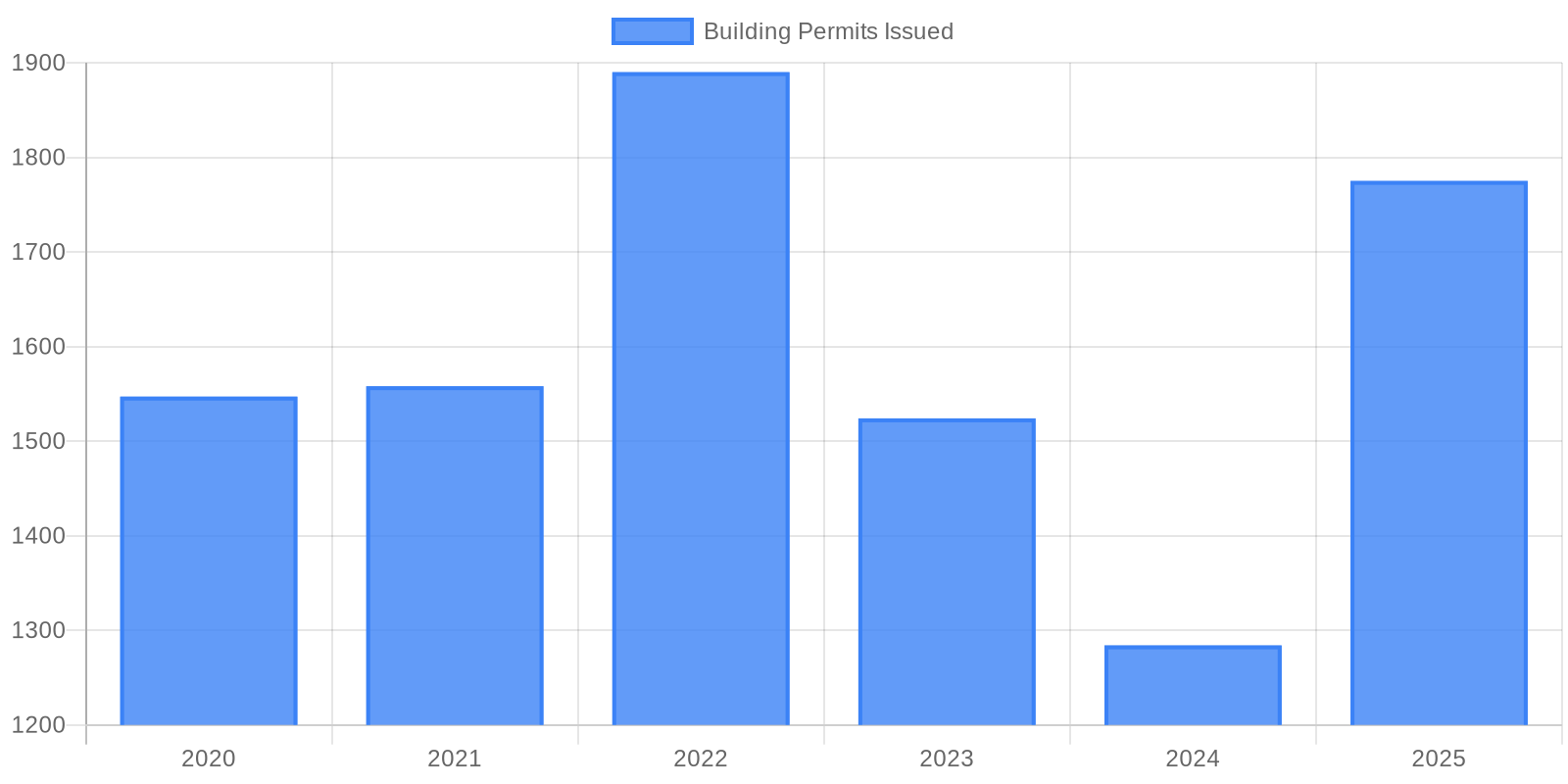
Annual single-family and duplex building permits issued in Los Angeles show a sharp 2024 decline followed by a 2025 recovery, though permit levels remain below the 2022 peak and far short of the city's housing production needs.
The numbers tell a story of volatility and missed opportunity. After holding relatively steady at 1,547 and 1,558 permits in 2020 and 2021, single-family and duplex permits jumped to 1,890 in 2022—the peak of this period. Then came the slide: down to 1,524 in 2023, then the brutal drop to just 1,284 in 2024. The 2025 recovery to 1,775 permits represents a 38% increase year-over-year, bringing activity back near 2022 levels but still well below what the city historically permitted. For context, the City of LA historically permitted more than 13,000 new residential units per year between 2015 and 2022, though that figure includes all housing types, not just single-family and duplexes.
The 2024 collapse and partial 2025 recovery track closely with what's happening across L.A.'s broader housing market. Los Angeles housing permits fell 23% overall in 2024, driven by what developers describe as brutal economics. Rising interest rates pushed financing costs higher, material prices remained unstable, and labor shortages slowed timelines. Add in city approvals dragged on for months, sometimes years, and many projects simply stopped penciling. The city's controversial Measure ULA mansion tax didn't help—real estate agents say it locked up supply by discouraging property sales. But the 2025 uptick suggests something changed. Part of that was the Citywide Housing Incentive Program (CHIP), which took effect on February 11, 2025. The third quarter results in 2025 were also a roughly 60 percent improvement over the same period in 2024, partly reflecting approved rebuilds in the Pacific Palisades, where homes destroyed or damaged in January's Palisades Fire moved through the permit pipeline.
The deeper problem is that even 2025's rebound doesn't come close to solving L.A.'s housing shortage. Under California's state-mandated housing framework, the city must plan for 456,643 new residential units by 2029, but as of the end of 2025, only 81,306 units had been permitted—just 17.8% of the goal with roughly half the timeline already elapsed. Single-family and duplex homes represent a sliver of that total production, but they're an important part of the housing mix, particularly for families seeking ownership opportunities. The challenge is that Los Angeles has one of the weakest relationships between housing demand and housing production of any major U.S. metro area—meaning that even when prices rise, new housing supply is slow to follow. CHIP was designed to change that by streamlining approvals and offering density bonuses, but many approved developments are failing to move forward due to financial constraints, with developers finishing their permitting because they were in the process, but not actually building the units. Until financing costs drop and regulatory timelines shrink, L.A.'s permit numbers will keep riding this rollercoaster—and the city will keep falling further behind on its housing goals.