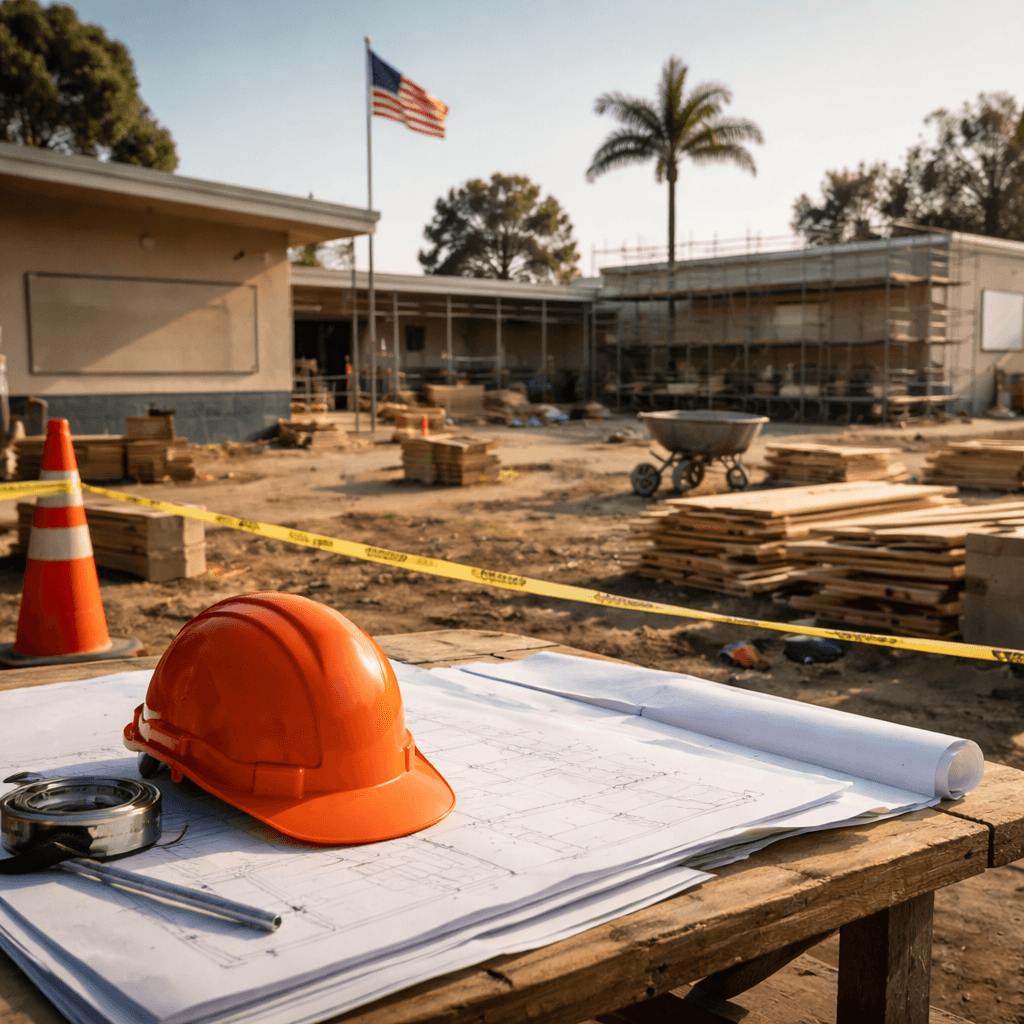
A coalition of parents, students, educators and advocacy groups is asking a California court to temporarily halt more than $3.2 billion in school modernization funding, a move that could delay hundreds of repair and renovation projects across the state. The request for an injunction targets modernization funding tied to California's Proposition 2 school bond program while the broader lawsuit, Rodriguez v. State of California, works its way through Alameda County Superior Court. If approved, the order could temporarily stop state agencies from processing numerous pending applications tied to repair and renovation work.
The lawsuit challenges the current matching-fund structure for school modernization, arguing it unfairly favors districts with stronger property tax bases and greater local financing capacity. According to court filings, plaintiffs represent communities in several lower-income districts where aging school facilities reportedly face issues including roof leaks, failing building systems and outdated infrastructure. The case focuses specifically on modernization funding rather than new school construction, with plaintiffs contending that low-wealth districts struggle to secure state support for critical repairs and infrastructure upgrades, leaving many campuses with deteriorating conditions.
State officials have opposed the injunction request, arguing that delaying bond distributions would create broader harm by postponing urgently needed repair projects statewide. State attorneys also maintain that all districts have access to modernization funding programs and point to hardship assistance provisions designed to help districts with limited financial capacity. Advocacy groups involved in the case argue that unequal access to modernization funding contributes to disparities in educational environments.
The lawsuit could ripple through California's construction industry because California remains one of the nation's largest public education construction markets. A prolonged legal fight could delay procurement schedules for contractors specializing in K-12 renovation, HVAC upgrades, roofing, electrical systems and campus infrastructure improvements, with any disruption in bond-funded modernization activity affecting bid pipelines, workforce planning and material demand across multiple trades. The challenge comes as districts already manage rising construction costs, deferred maintenance backlogs and tighter public budgets. The report explains that plaintiffs argue the state's existing allocation process disproportionately benefits districts that can move projects through planning and financing stages more quickly because of greater local resources and staffing capacity.
The legal dispute also revives longstanding debates over how California funds school facilities compared to operational education spending. According to the report, while past court rulings pushed the state toward a more equitable formula for district operating funds, school construction and modernization financing has remained heavily dependent on local property wealth and voter-approved bonds. For construction owners and developers, the outcome could signal whether California moves toward broader reforms in public school capital funding, including potential changes such as revised allocation formulas, expanded hardship funding or new approaches to distributing future bond proceeds. A ruling on the injunction could determine whether current modernization projects move forward on schedule or face delays while the legal battle continues.