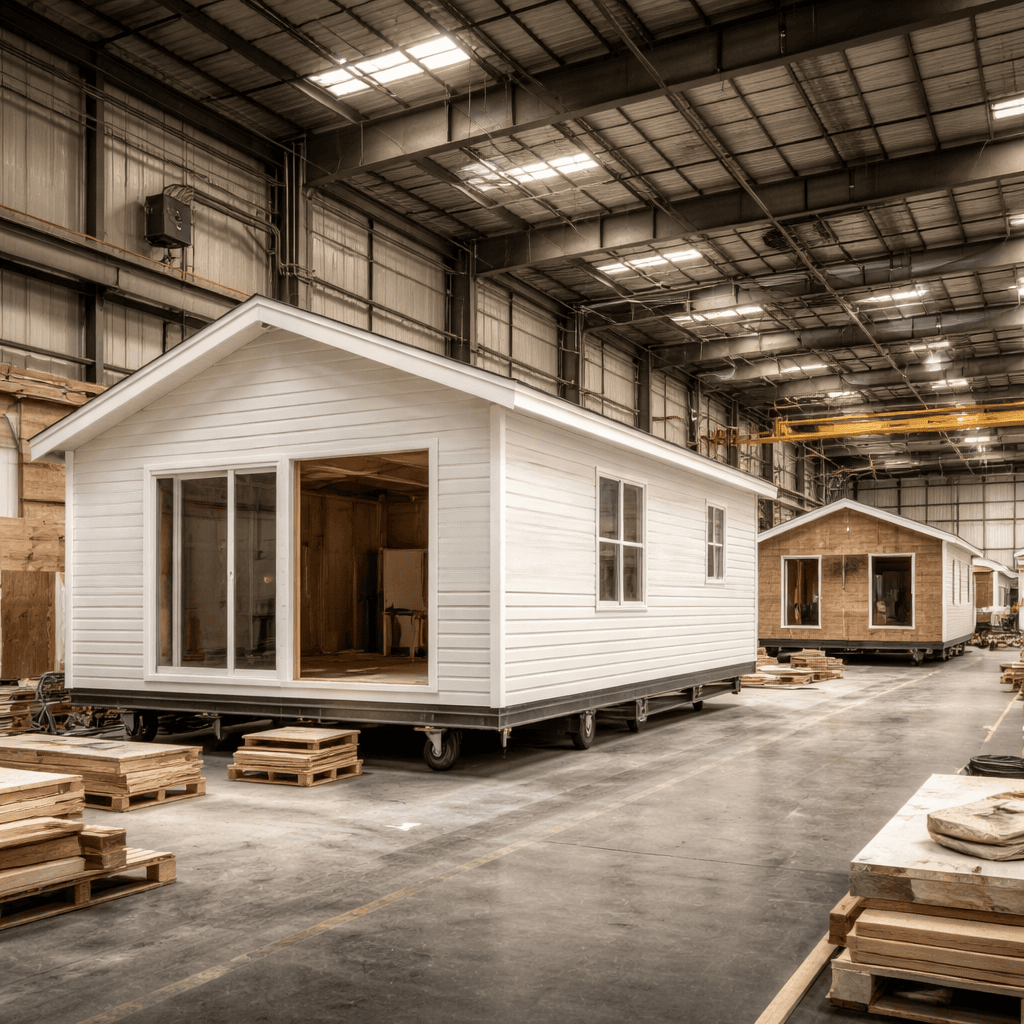
California is moving to remove barriers that make it harder to build factory-made housing, as developers increasingly turn to industrialized construction to cut costs and speed up building. The state is considering changes to building codes and construction financing rules that currently slow down modular and manufactured home projects. These factory-built homes get assembled off-site in controlled environments, then trucked to their final location — a process that can slash construction time and labor costs compared to traditional stick-built methods. The push comes as California grapples with a housing crisis that's made homeownership unaffordable for millions of residents.
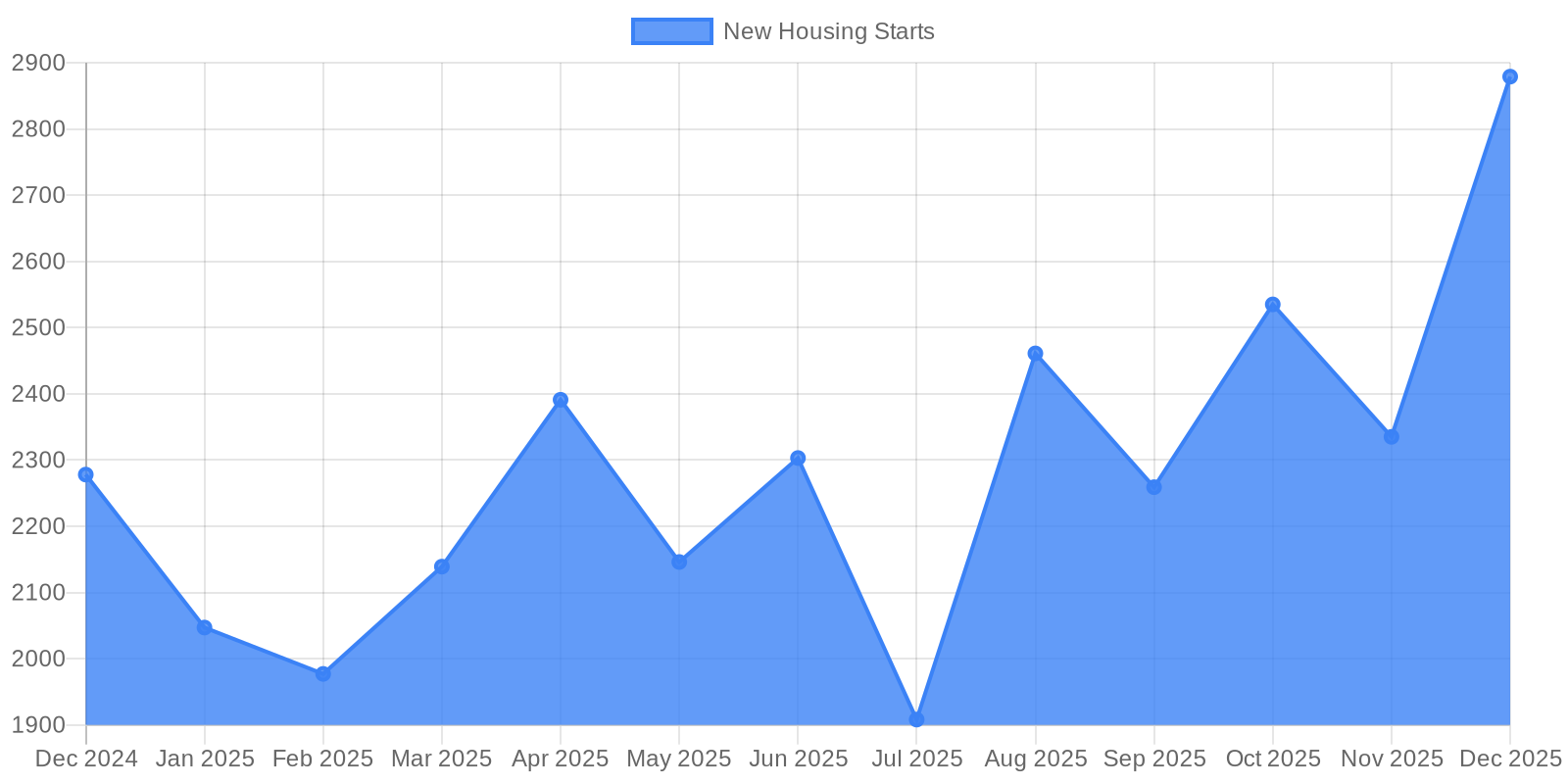
New housing starts in the Los Angeles metro area climbed 26% from December 2024 to December 2025, but monthly figures remain volatile — highlighting the need for faster, more predictable construction methods like factory-built housing.
The shift isn't just about California's affordability crisis. The Federal Housing Finance Agency recently published new national datasets on manufactured home prices, providing quarterly data on how this "market segment that often serves as an affordable option for homebuyers" is performing. What's striking: from the first quarter of 2000 through the second quarter of 2025, manufactured homes and site-built homes appreciated at nearly identical rates — 219.1% versus 219.9%. That shatters the old myth that factory-built homes don't hold value. Yet despite comparable appreciation, mortgage applications for manufactured home loans were denied at a 57.8% rate compared to just 10% for traditional homes, according to FHFA's housing market analysis. The financing gap keeps these cheaper homes out of reach even when buyers can afford them.
Here's how the system currently works against factory-built housing: most building codes were written decades ago with stick-built construction in mind, creating paperwork tangles and inspection delays for homes assembled in factories. Lenders treat manufactured homes differently too, often requiring them to be classified as real property — permanently attached to owned land — to qualify for conventional mortgages. Without that classification, buyers face personal property loans with interest rates that can run 2-4 percentage points higher and terms maxed at 15 years instead of 30. The new housing starts data for the LA metro area shows traditional construction hit 2,879 units in December 2025, up from 2,278 the year before, but that's still a drop in the bucket for a region that needs tens of thousands of new homes annually. California recently launched funding specifically for factory-built housing to help wildfire survivors rebuild faster, showing how prefab construction can respond quickly when disasters wipe out entire neighborhoods.
If California succeeds in streamlining the rules, it could crack open a supply valve that's been stuck for years. Factory-built homes average around $123,000 compared to over $400,000 for site-built construction, making them one of the few realistic paths to homeownership for working families. But changing building codes is just the start — the state also needs to fix the financing mess that makes banks treat identical homes differently based on how they were assembled. The housing starts trend in LA shows construction is picking up, but without a fundamental shift in how California builds and finances homes, even that uptick won't come close to meeting demand. The real test is whether rule changes can turn factory-built housing from a niche option into a mainstream solution.